? Below: Juan Espinoza Martinez has spent more than a year fighting for his freedom — starting when authorities accused him of soliciting then-Border Patrol boss Gregory Bovino's murder and continuing in immigrant detention. In an exclusive interview with the Sun-Times, he remains steadfast: "I'm not giving up."
?️ Plus: The new utility billing method hitting renters hard, inside one of the Midwest's last parade float companies and more news you need to know below.
? Keeping score: The Blackhawks beat the Maple Leafs, 6-3.
?️ Today's weather: Partly cloudy with a high near 60.
? Subscribe: Get our morning newsletter delivered to your inbox weekday mornings.
⏱️: An 8-minute read
In custody: Ten months have passed since Juan Espinoza Martinez, 38, heard the words "not guilty" — but he's still not a free man. Immigration authorities have held the Little Village resident in custody since he was acquitted of plotting the murder of then-U.S. Border Patrol Cmdr. Gregory Bovino, the controversial face of the Trump administration's Midway Blitz deportation campaign.
Sun-Times interview: In a call arranged by his legal team, Espinoza Martinez said he'd rather sit behind bars than be deported without his loved ones to Mexico, a country he doesn't remember. Espinoza Martinez said he was brought to the U.S. as a child, and today, his children, siblings and mother all live in Chicago. "I'm not abandoning my family," Espinoza Martinez said. "I'm going to hold on, incarcerated, because I'm not giving up."
Key context: His fight for freedom has now stretched more than a year, starting when federal authorities accused him of soliciting Bovino’s murder. Espinoza Martinez put his fate in the hands of a jury, in the only trial to result from Operation Midway Blitz. The panel swiftly acquitted him in January, deliberating for about three hours. U.S. Immigration and Customs Enforcement took him into custody the next day. He is now being held in Missouri, ICE records show.
The RUBS route: Renters are seeing their bills change wildly each month as more landlords turn to a "ratio utility billing system," known as RUBS. It's estimated that tens of thousands of Chicago renters live in buildings that use RUBS.
How it works: A landlord will outsource the billing to a third-party company like Conservice, which splits up the master gas, sewer and water bills according to a formula based on the size of the apartment, the number of occupants, and other factors. Conservice then tacks on a service fee and sends the bill out to renters.
At issue: Consumer advocates and tenant organizations say this way of billing is becoming more of a trend in master-metered apartment buildings that don't have separate water and gas meters for each unit. And as utility costs continue to climb, tenants say they are trying to keep up with the fluctuating bills while struggling to get answers from their landlords.
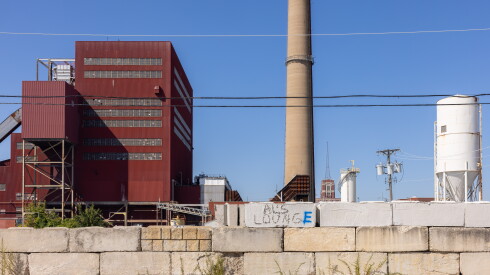
AI obstacles: Demand for electricity to power data centers is hindering the state's plans to reduce pollution and fight climate change, a pair of recently released state reports found.
At issue: Under an ambitious law signed by Gov. JB Pritzker in 2021, the state set out to retire all fossil-fuel power plants between now and 2050. But big new data centers are requiring so much electricity that it has become difficult for the state to shut down all of the coal, gas and oil sources used to meet demand, the reports found.
Bottom line: The reports confirmed fears that environmental and climate advocates have had for more than a year. Cleaner sources of power, including wind and solar farms, are not being built quickly enough to keep up with the new demands from the data centers being used to power artificial intelligence.
Today's clue: 2D: Thompson Center architect Helmut
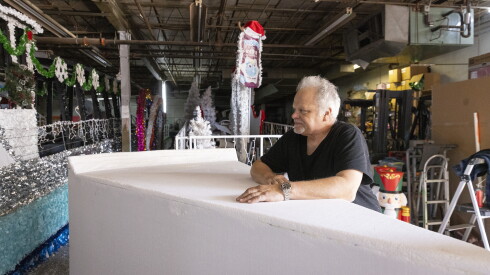
Hank Fiene scrapes a wire brush across an enormous slice of cheesecake.
Or, rather, across a triangular wooden frame covered in plywood, then encased in sheets of Styrofoam, which Fiene is transforming into a wedge of Eli's cherry cheesecake eight feet long and four feet tall, rotating on a circular platform on a float in the parade at the Wintrust Magnificent Mile Lights Festival this Saturday.
"This float has to be done by Thursday morning," says Fiene, coated in tiny bits of polystyrene, standing in the cluttered, sprawling warehouse of ABC Parade Floats in Ashburn.
"There used to be eight parade float companies in the Chicagoland area," he says. "There are only two of us left in the Midwest now."
Fiene, who started ABC in 1990, supplies floats to about 70 parades a year.
Growing up on the South Side, Fiene dreamed of being a portrait artist, then "found out you have to die before you can make any money," he says. So he shifted to the idea of being a commercial artist. "But you need a lot of experience for that." So he went into the parade float business as a teenager, and still marvels at his good fortune.
"I'm always amazed I make a living doing this," he says. "C'mon, I build parade floats."
Now that the midterm election dust has just about all cleared, we want to hear about what you thought of our coverage.
We'd like to know what helped, what was missing and what we could do better next time.
Take our five-minute survey here.
Thanks for reading the Sun-Times Morning Edition! Got a story you think we missed? Email us here.
Written and curated by: Matt Moore
Editor: Michael Lansu
Copy edited by: Satchel Price